
Embark on a journey through the captivating world of church architecture, where history, culture, and symbolism intertwine to create awe-inspiring structures that have withstood the test of time.
Discover the evolution of architectural styles, the profound symbolism behind every intricate detail, and the thoughtful spatial design that elevates the worship experience in these sacred spaces.
Historical Significance
Church architecture has played a significant role throughout history, reflecting the beliefs, values, and cultural influences of different time periods. The evolution of church architecture can be traced through various historical eras, each marked by distinct styles and elements that were influenced by the events and developments of the time.
Ancient and Medieval Periods
During the Ancient and Medieval periods, churches were typically constructed in a cruciform shape, symbolizing the cross. Romanesque architecture was prominent during this time, characterized by thick walls, rounded arches, and barrel vaults. These churches often featured intricate stone carvings and elaborate decorations, showcasing the power and glory of God.
Renaissance and Baroque Periods
The Renaissance and Baroque periods saw a shift towards more elaborate and ornate church designs. Renaissance churches embraced classical elements such as domes, columns, and symmetry, inspired by the architecture of ancient Rome and Greece. Baroque churches, on the other hand, were known for their dramatic use of light and shadow, intricate ceiling frescoes, and grandiose facades.
Neoclassical and Gothic Revival Periods
In the Neoclassical period, churches drew inspiration from classical Greek and Roman architecture, featuring columns, pediments, and symmetrical designs. The Gothic Revival period, on the other hand, saw a return to the pointed arches, ribbed vaults, and flying buttresses of Gothic architecture, emphasizing verticality and light.
Modern and Contemporary Era
Modern and contemporary church architecture has embraced a wide range of styles, from minimalist designs to innovative structures that challenge traditional concepts. Architects have experimented with new materials, forms, and technologies to create churches that reflect the diversity and complexity of the modern world.
Architectural Styles
Church architecture has evolved over centuries, reflecting the cultural and artistic influences of different time periods. Various architectural styles have emerged, each with its unique characteristics and significance.
Romanesque Architecture
Romanesque architecture, prevalent in Europe from the 11th to the 12th centuries, is characterized by thick walls, rounded arches, and barrel vaults. Churches like the Durham Cathedral in England exemplify this style with its massive stone structure and small windows.
Gothic Architecture
Emerging in the 12th century, Gothic architecture is known for its pointed arches, flying buttresses, and stained glass windows. The Notre-Dame Cathedral in Paris is a prime example of this style, with its towering spires and intricate rose windows.
Baroque Architecture
Developed in the 17th century, Baroque architecture is marked by grandeur, ornate decoration, and dramatic lighting. The St. Peter's Basilica in Vatican City showcases the Baroque style with its lavish interiors, elaborate sculptures, and frescoes.
Symbolism and Iconography
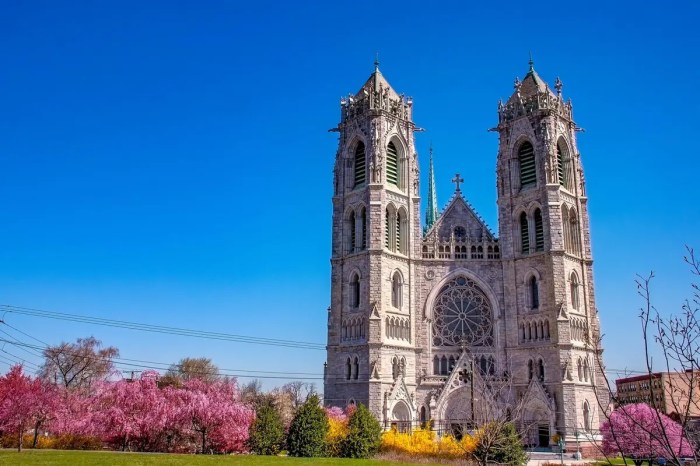
Symbolism and iconography play a significant role in church architecture, serving as visual representations of religious narratives and beliefs. These elements help create a sacred space that facilitates worship and spiritual connection for believers.
Spires
Spires are prominent features of many churches, reaching towards the heavens and symbolizing the aspiration for divine connection. They serve as a visual reminder of the presence of God and the church's role as a place of spiritual guidance and enlightenment.
Stained Glass Windows
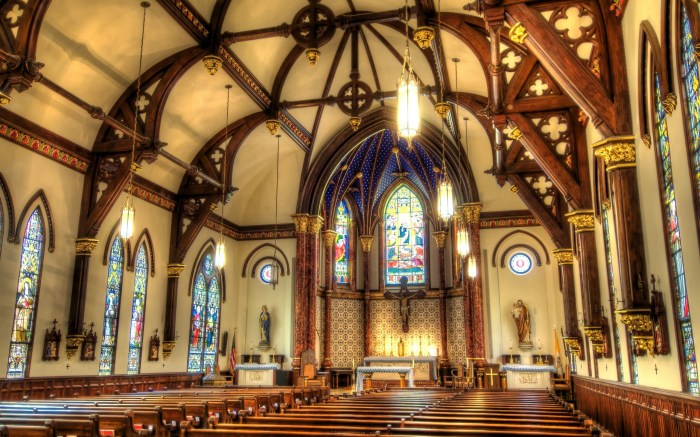
Stained glass windows are not merely decorative elements but also convey religious stories and teachings to worshippers. Through vibrant colors and intricate designs, these windows depict biblical scenes, saints, and symbols that enhance the spiritual atmosphere of the church.
Altars
Altars hold a central place in church architecture, symbolizing the sacred space where the Eucharist is celebrated and the faithful gather to worship. The design and decoration of altars often incorporate symbolic elements such as crosses, candles, and religious imagery to emphasize the significance of the ritual.
Iconography
Iconography in church architecture involves the use of religious symbols, images, and artwork to communicate theological concepts and narratives. From frescoes and mosaics to statues and paintings, these visual representations help convey the teachings of the faith and inspire devotion among worshippers.
Sacred Geometry and Mathematical Proportions
The use of sacred geometry and mathematical proportions in designing churches reflects a belief in the harmony and order of the universe as manifestations of divine creation. Architects often employ geometric principles such as the golden ratio and Fibonacci sequence to create spaces that evoke a sense of awe and reverence.
Spatial Design and Functionality
Church architecture is carefully planned to accommodate religious ceremonies and gatherings while enhancing the worship experience through the use of light, acoustics, and spatial organization. The layout of a church is designed with symbolic meaning in mind, including the orientation of churches towards the east.
Layout and Functionality
The layout of a church typically includes a nave, transept, and sanctuary. The nave is where the congregation gathers for worship, while the transept forms a cross shape with the nave, symbolizing the crucifixion of Jesus. The sanctuary is where the altar is located, representing the presence of God.
This spatial organization allows for different activities and rituals to take place seamlessly during religious services.
Use of Light and Acoustics
Light plays a significant role in church architecture, symbolizing divine presence and spiritual enlightenment. Stained glass windows often depict biblical stories or saints, allowing natural light to filter through and create a mystical atmosphere. Acoustics are also carefully considered to amplify the voices of the clergy and the choir, enhancing the musical and spoken elements of worship.
Orientation towards the East
Churches are traditionally oriented towards the east, with the altar at the eastern end. This practice dates back to early Christian times when believers faced east during prayers as a symbol of looking towards the Second Coming of Christ. The rising sun in the east is associated with the resurrection and represents the light of Christ illuminating the world.
This symbolic orientation adds a deeper layer of meaning to the spatial design of churches.
Wrap-Up
As we conclude our exploration of church architecture, we are left with a profound appreciation for the craftsmanship, spiritual depth, and cultural significance embedded in these architectural marvels.
Question & Answer Hub
How did historical events influence church architecture?
Historical events such as wars, religious reforms, and cultural shifts often dictated the design and construction of churches, leading to diverse architectural styles.
What is the significance of sacred geometry in church design?
Sacred geometry is used in church architecture to create harmonious spaces that reflect cosmic order and divine proportions, enhancing the spiritual experience of worshippers.
Why are churches often oriented towards the east?
Churches are traditionally oriented towards the east to symbolize the rising sun, representing the resurrection of Christ and the hope of a new dawn.